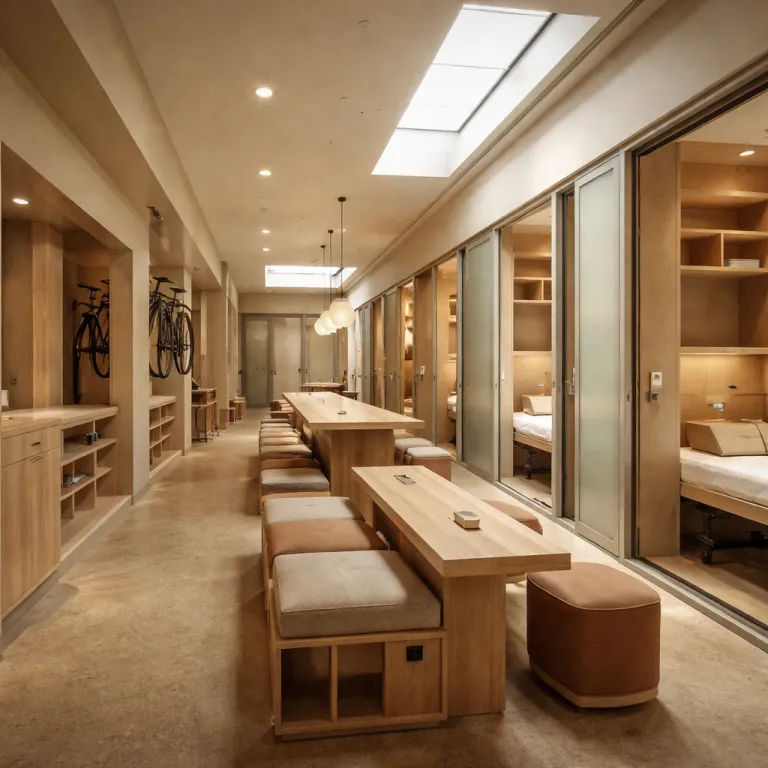
The quiet design economy hotel revolution
There is a quiet design economy hotel revolution reshaping how couples travel. This shift treats the budget hotel as a canvas for contemporary hospitality design rather than a compromise, and it is quietly redefining what a romantic stay can feel like at an honest price. The most interesting properties now use every square metre with intent, turning compact guest rooms into mini oasis spaces where the shower runs hot, the sheets stay crisp, and the neighbourhood rewards the walk.
The lean luxury thesis, championed by groups such as Ruby Hotels, underpins this movement and shows how greater value emerges when you strip away the bloat. By removing underused restaurants, oversized lobbies, and full room service, these hotels redirect investment into better beds, richer interior design, and social spaces that actually earn their stars in the eyes of guests. This is the design economy in practice, where the star rating matters less than the place that lets you feel rested, connected to the local community, and quietly indulged.
Global operators and design firms have accelerated this evolution by pairing modular construction with recyclable and natural materials. For instance, Shanghai-based Vermilion Zhou Design Group has publicly showcased fully automated hotel concepts that use prefabricated units, self-service kiosks, and digital check-in to reduce operating costs while elevating the guest experience. Similarly, Red Lion Hotels Corporation, through its Signature Inn brand, has shown that an economy hotel can lean into retro style, art, and character without chasing a traditional luxury star classification.
For couples, the result is a new category of hotels where modern life realities meet romance. You might check into a time hotel concept near a station, tap your phone at the door, and step into guest rooms that feel like a private studio rather than a generic chain product. These spaces are compact but carefully edited, with interior touches such as dimmable lighting, natural materials underfoot, and a small table that doubles as workspace and breakfast corner.
Designers talk about quiet luxury design as a focus on simplicity and connection to nature, and that ethos now guides many economy hotels. Low-VOC paints, natural fibre carpets, and energy-efficient lighting are no longer reserved for eco resorts or award-winning spa retreats; they are becoming standard in new urban hotel design projects. When you read the fine print on these properties, you see that sustainability is not a marketing flourish but a structural choice that shapes the entire hospitality design process.
This is where the design process becomes a strategic tool rather than a decorative afterthought. Architects and interior specialists use reclaimed wood, bamboo, and recycled metal to create texture and warmth that traditional luxury hotels often spend millions to fake with imported finishes. Materials that work harder give each place a sense of artful patina, and they help couples feel that their experiences are rooted in the local story rather than a corporate template.
Mini oasis spaces: when less floorplan means more romance
The most successful players in this new hotel landscape understand that the room is a mini oasis, not a storage unit for amenities. Instead of cramming in a desk, an armchair, and a wardrobe that no one uses, they refine the hotel concept around three essentials: the bed, the bathroom, and the light. When those three elements are executed with care, couples feel an immediate sense of calm and intimacy, even in guest rooms under 18 square metres.
This shift from quantity to quality is visible in the way interior design now treats the bed as the true star of the show. A generous mattress, high thread count sheets, and blackout curtains cost less than a marble lobby, yet they deliver a far greater impact on the guest experience and on repeat bookings. For a deeper breakdown of what separates a merely good room from a genuinely memorable one, economy stay readers should look at this guide to what makes a great economy hotel room.
Bathrooms follow the same logic, with walk-in showers, strong water pressure, and thoughtful lighting replacing bathtubs that rarely see use. In many hotels, glass partitions and clever interior zoning allow natural light to reach the shower, which makes compact spaces feel larger and more luxurious. This is hospitality design that respects modern life, where most guests prefer a quick, invigorating shower before heading out into the city.
Storage becomes another quiet hero of this design-led approach. Instead of bulky wardrobes, you see open rails, slim shelves, and under-bed drawers that keep luggage out of the way without swallowing the room. These solutions are not only cheaper to build; they also make the place feel more like a stylish city apartment than a dated three-star corridor of identical boxes.
Lighting strategy is where many award-winning economy hotels now differentiate themselves. Layered lighting, with a mix of warm ceiling spots, bedside lamps, and subtle LED strips, allows couples to tune the mood from bright and functional to soft and romantic. When interior designers coordinate this with a restrained colour palette and a few pieces of local art, the result is a room that feels intentionally composed rather than cost engineered.
Noise control is another crucial part of the hotel design conversation that value-conscious couples should not overlook. Good acoustic insulation, solid doors, and thoughtful placement of elevators can make the difference between a restful night and a frustrating stay. The best hotels in this segment treat silence as a form of invisible luxury, proving that not every indulgence needs to be seen to be felt.
From beige budget to character rich: the Schrager effect and beyond
One of the most powerful forces behind the design economy hotel revolution has been the Schrager effect. When Ian Schrager launched the PUBLIC brand in New York with the promise of “luxury for all,” he demonstrated that a luxury mindset could be applied to an accessible price point without diluting either. The lesson for couples is clear: generic does not equal affordable, and character does not automatically mean expensive.
Look at how properties such as Ace Hotel in various cities have long blurred the lines between star categories by prioritising community, art, and social spaces over formal luxury cues. Their lobbies feel like living rooms for the neighbourhood, where guests and locals share tables, read quietly, or work over coffee, and this approach has influenced a generation of hotels that now see public spaces as revenue-generating social hubs. In Boston and other design-forward cities, you can feel this shift in the way new hotels open with co-working tables, compact stages for live music, and bars that double as check-in desks.
At the same time, brands like Red Lion Hotels Corporation have shown that an economy property can lean into retro style and narrative without chasing a five-star badge. Their Signature Inn concept uses playful interior details, bold colours, and nostalgic signage to create a sense of place that feels both familiar and fresh. This is a far cry from the beige corporate sameness that once defined budget hotels, where every corridor looked like the last and every guest room felt like a compromise.
Design firms such as Vermilion Zhou Design Group push the envelope further with fully automated hotel concepts that integrate digital check-in, self-service kiosks, and modular guest rooms. Automation here is not a gimmick; it is a way to reduce staffing costs and redirect investment into better materials, smarter layouts, and more generous social spaces. Industry reporting from outlets such as Hotel Management Magazine has highlighted a marked increase in automated operations since 2020, indicating that this is no longer an experiment but a structural shift.
Fashion brands have also entered the conversation, lending their visual language to hospitality design and blurring the line between retail and hotel experiences. When a time hotel collaborates with fashion labels on uniforms, textiles, or limited-edition art, the result can be a property that feels like a living lookbook rather than a static corridor of rooms. For couples, this means that even a short city break can feel like stepping into a curated world where every surface has been considered.
Photography plays a crucial role in this new landscape, and names such as Robert Benson have helped define how design-forward hotels present themselves visually. His images of guest rooms, lobbies, and exterior façades capture the interplay of light, texture, and human presence that makes these spaces feel alive. When you scroll through a booking website and feel drawn to a particular place, chances are that careful interior design and thoughtful photography are working together to tell a coherent story.
How booking platforms curate the new mini oasis economy
For couples navigating this design economy hotel revolution, the booking website has become as important as the hotel lobby. A luxury and premium booking platform focused on budget hotels must act less like a price comparison engine and more like an editor of experiences. The mission of economy stay style platforms is to filter the noise and highlight hotels where design, hospitality, and honest pricing align.
On a well-curated site, you will see filters that go beyond star ratings and location pins. Instead, you can search for mini oasis spaces with strong interior design, natural materials, and social areas that feel like an extension of your living room rather than a holding pen for guests. This is where a guide such as an elevated budget stay in Shinjuku becomes valuable, because it shows how a single property can combine compact guest rooms, thoughtful hospitality design, and a strong sense of local community.
Curators on these platforms look for specific signals that a hotel is part of the design revolution rather than a follower. They examine the hotel concept, the use of eco-conscious materials, the quality of light in the rooms, and the way public spaces invite both guests and locals to linger. Quiet luxury design, connection to nature, and fully automated hotels are not buzzwords here; they are criteria that shape which properties earn a place on the shortlist.
Available research from hospitality consultancies such as WATG indicates that a clear majority of travellers now seek unique experiences rather than standardised stays, and this appetite is especially strong among couples planning romantic getaways. When you combine that with the rapid rise in automated operations reported across the hotel sector, you see why platforms that understand both technology and design are best placed to guide the next wave of hotel choices.
For travellers, the practical takeaway is to read listings with a designer’s eye. Look for mentions of interior design, natural materials such as reclaimed wood or bamboo, and hospitality design elements like layered lighting, acoustic insulation, and flexible social spaces. Pay attention to whether the hotel speaks about community, local partnerships, and art, because these details often signal a deeper commitment to experience rather than surface-level style.
Ultimately, the most interesting hotels in this segment prove that luxury is no longer a fixed star rating but a feeling created by thoughtful design, attentive hospitality, and a fair price. When a place manages to align those elements, it becomes a true mini oasis in the fabric of modern life, whether you are staying for one night or a long weekend. That is the quiet power of the design economy hotel revolution, and it is reshaping how couples think about value, romance, and the simple pleasure of a well-made room.
Key figures behind the design economy hotel revolution
- Recent hospitality research from firms such as WATG suggests that a large majority of travellers now prioritise unique experiences over standardised stays, which helps explain why character-rich economy hotels and mini oasis guest rooms are gaining market share among couples. For example, WATG’s published trend commentary in the early 2020s notes that experience-led design has become a primary differentiator in new hotel projects.
- Trade publications including Hotel Management Magazine report a significant increase in automated hotel operations since 2020, reflecting the rapid adoption of digital check-in, self-service kiosks, and smart room controls that free budgets for better interior design and materials. These articles consistently highlight automation as a long-term operational strategy rather than a short-lived experiment.
- Industry case studies of modular construction frequently show build time reductions of up to around 30% compared with traditional methods, allowing design-forward hotels to open faster and allocate more capital to guest-facing spaces and hospitality design details. This figure appears across multiple modular hotel project summaries and conference presentations.
- Energy-efficient lighting and low-VOC paints, now standard in many new builds, can cut operational energy use by roughly 20% or more over the life of a hotel, aligning the design revolution with eco resort–level sustainability goals. These estimates are drawn from aggregated green building benchmarks and lifecycle assessments used widely in hospitality design.
- Internal booking platform data from economy-focused sites consistently indicates that properties highlighting natural materials, local art, and award-winning interior design receive significantly higher click-through and conversion rates than visually generic competitors in the same star category. While exact percentages vary by platform, the direction of the trend is clear and repeatedly confirmed in internal analytics.